Thermal technology
Thermal technology is based on a fundamental physical principle: all objects with a temperature above absolute zero (−273 °C / −459 °F) emit infrared (thermal) energy. The intensity of this radiation depends on the surface temperature.
Thermal imaging cameras detect infrared (IR) radiation, convert it into an electrical signal, and then transform it into a visible image. As a result, a thermal map is created that shows temperature differences. This makes it possible to see objects even in complete darkness.
Camera сomponents
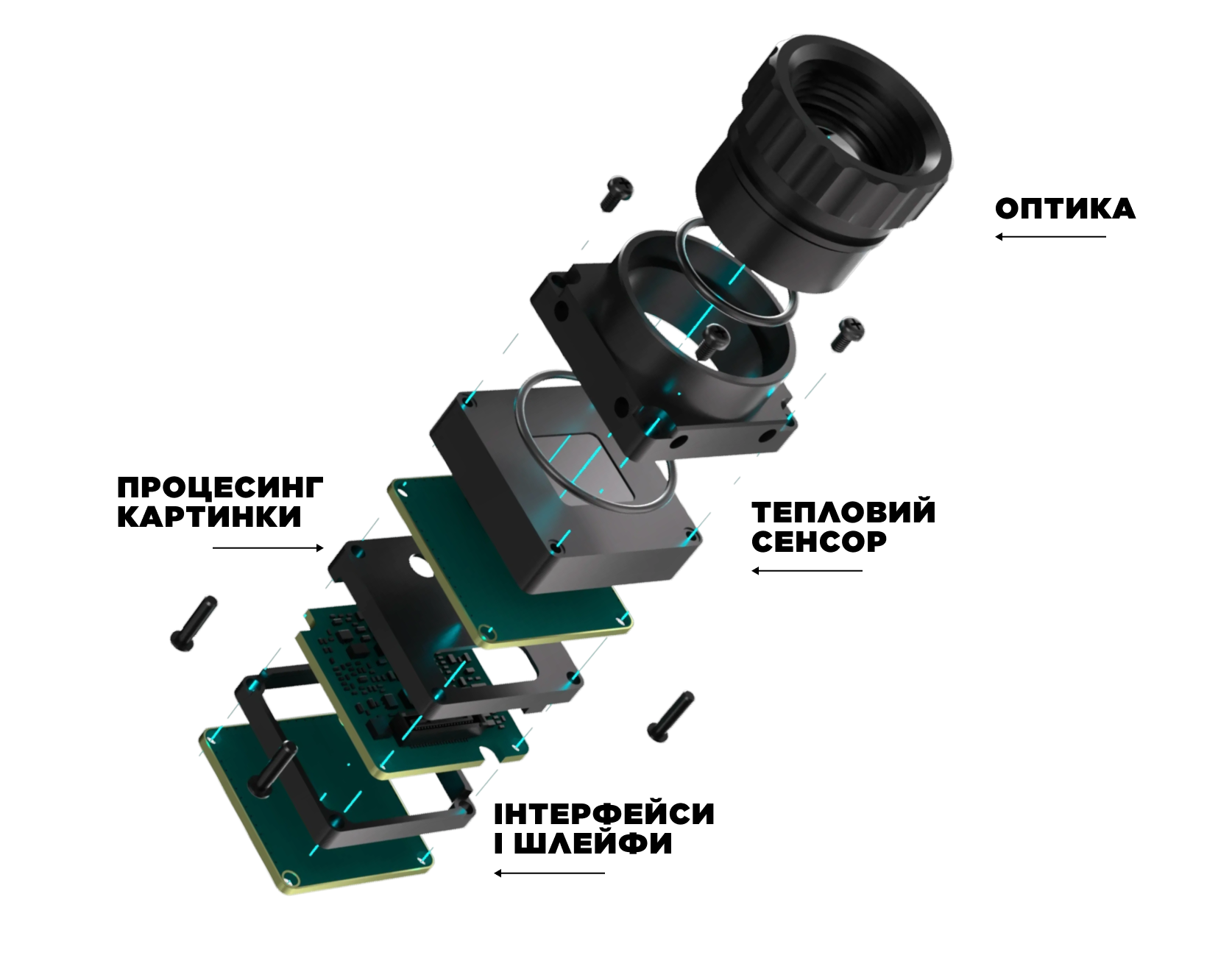
A thermal camera consists of several key components:
Infrared optics
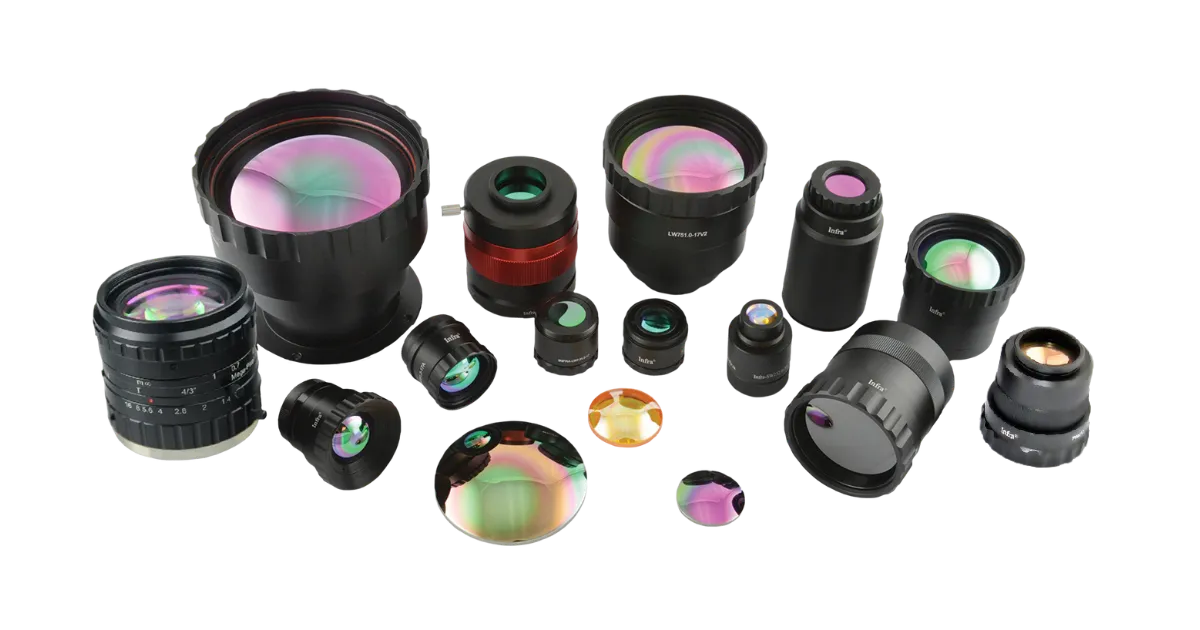
A special lens that transmits infrared radiation and focuses it onto the sensor. Standard quartz glass is not suitable because it does not transmit IR radiation in the 8–14 µm range.
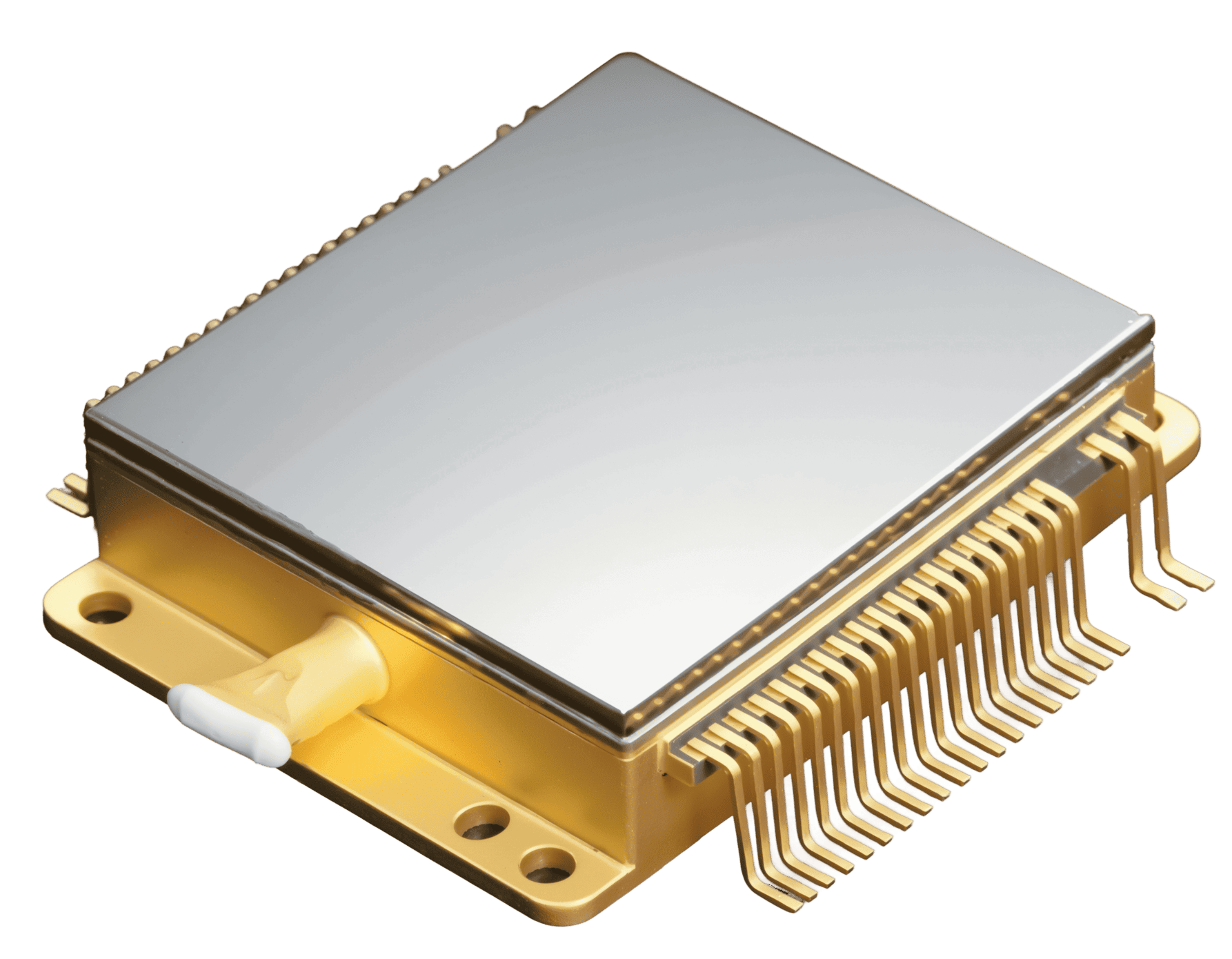
IR detector (microbolometer)
.png)
This is the “heart” of the thermal imager. Most commonly, an uncooled microbolometer is used, which responds to temperature changes caused by infrared radiation and converts them into an electrical signal.
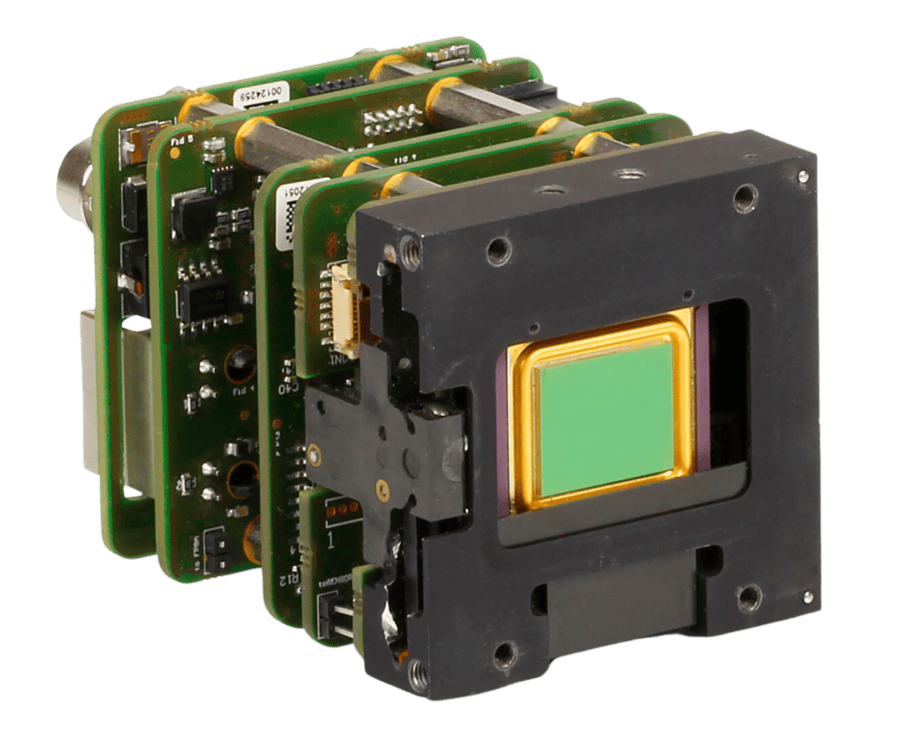
Image processing unit
.png)
-
amplifies the signal;
-
converts the thermal map from the sensor into an image that is understandable for humans and suitable for computer processing;
-
transmits the information to a receiver that displays the image.
Interfaces and connections
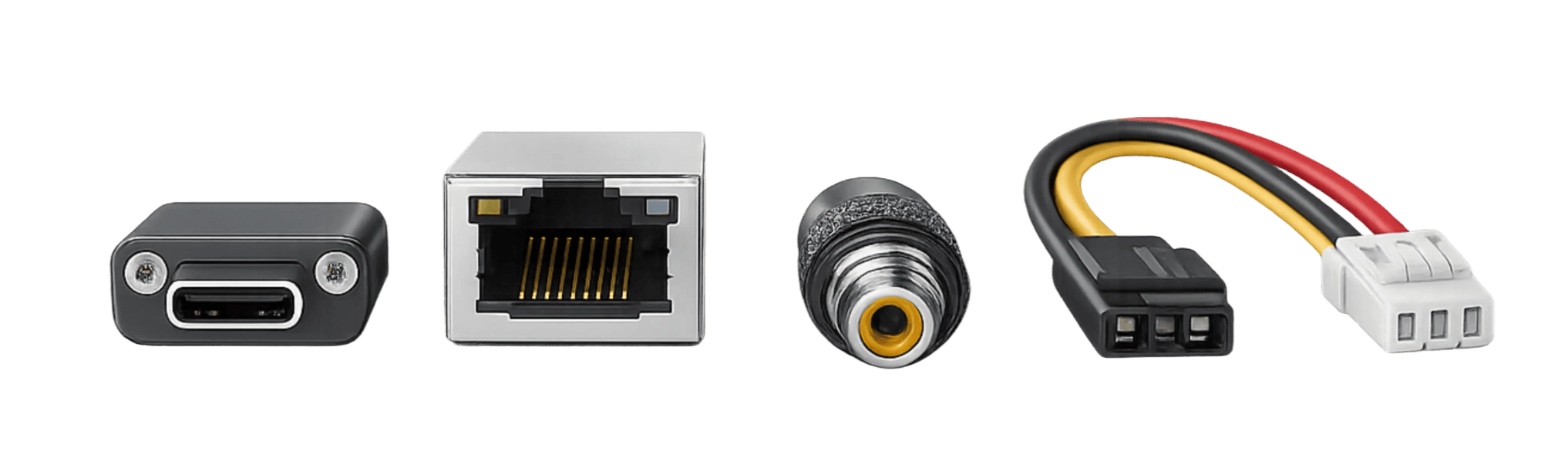.png)
Interfaces and connections act as the “nervous system” of the device, ensuring its overall operation, interaction between all components, power supply, and output of the processed image to external devices.
Thermal camera operation process
-
Every object emits infrared heat.
-
The thermal imager’s sensor captures this radiation and converts it into electrical signals.
-
The device electronics process these signals, forming an image where different temperatures are represented by different colors or shades of gray.
-
The user sees a thermal image of the scene on the screen, allowing detection of people, animals, or objects even in complete darkness.
